Nail Health Journal

How to Stop Fingernails from Peeling and Splitting

Peeling and splitting often begin at the vulnerable free edge of the nail. Learn what can make the problem worse and how to protect the nail while a healthier-looking section gradually grows forward.

Published September 27, 2026Updated September 27, 2026Topics: Brittle Nails · Dry Nails · Natural Nail Care · peeling nails · Splitting Nails
In brief

Peeling and splitting usually need protection, not an instant repair. Smooth loose edges, reduce repeated water and chemical stress, and assess the newer nail growing from the base.

Quick fact

The portion of a nail that has already peeled or split cannot be permanently fused back together. The practical goal is to prevent the separation from travelling farther and protect new growth as it moves toward the tip.

Common contributors

Repeated wet-and-dry cycles, dishwashing, cleaning products, nail-polish remover, gel or acrylic removal, picking, aggressive filing, snags and dry weather can all add stress to the layered nail plate.

Helpful focus

Smooth loose edges instead of pulling them, keep vulnerable nails at a practical length, use gloves for prolonged wet work and follow one consistent nail-care routine long enough to judge the newer growth.

What may be happening

The natural nail plate is made of tightly connected layers. At the free edge, those layers receive the most water exposure, friction and everyday impact. If the layers begin to separate, the tip can flake, peel or split.

Pulling on a loose layer can remove nail that was still attached and allow a small problem to travel farther back. The already-separated section needs to grow forward before it can be trimmed away.

Common reasons and everyday stressors

Water is a frequent contributor because the nail repeatedly expands when wet and contracts as it dries. Detergents, cleaning chemicals and removers can add more stress. Manicure preparation, heavy buffing, peeling off polish or enhancements and using fingernails as tools can also weaken the edge.

More than one factor is often involved. Someone who washes frequently, changes polish often and keeps fragile nails long may be placing several types of stress on the same vulnerable area.

What you can do

Clip or gently file away loose, snagging material rather than peeling it. File in one direction with a gentle file, keep nails short enough that they are less likely to catch, and wear gloves for prolonged dishwashing or cleaning.

Reduce unnecessary remover exposure and avoid aggressive surface buffing. Choose a simple routine you can follow consistently instead of changing products every few days. If using FlexiNail Fingernail Conditioner, apply it directly to the natural nail plate and allow it to sit briefly; do not massage it into the nail, skin or cuticle.

What to expect as nails grow

Progress is gradual because a smoother-looking section must grow from the base and move toward the tip. Look for fewer new snags and breaks and for a more manageable section near the base rather than expecting the existing peeled tip to change overnight.

When it makes sense to get medical advice

Seek advice from a qualified healthcare professional if peeling or splitting begins suddenly, becomes severe, affects many nails without an obvious reason, or occurs with pain, swelling, bleeding, significant lifting, unusual color or changes in the surrounding skin.

Common questions

Can a peeled fingernail be repaired permanently?

The separated part cannot be permanently fused back together. Protect it from snagging while a new section grows forward and can eventually be trimmed.

Should I buff peeling layers smooth?

Avoid aggressive surface buffing, which removes more nail material. Gently smooth only loose or snagging edges.

Does keeping nails short help?

A practical length can reduce leverage, catching and repeated impact at a fragile free edge.

Sources and further reading

Canadian Dermatology Association: Brittle Nails

Lipner and Scher: Pathogenesis, Clinical Signs and Treatment Recommendations in Brittle Nails: A Review

A real customer experience related to this topic

“As a Dentist, before I began using FlexiNail, my nails were very short and weak. They peeled, bent and constantly chipped or broke very easily. I attributed their condition to the fact that as I practiced dentistry for over 40 years, I washed my hands about 50 times a day, wiping them with disposable towels and then immediately donning latex or vinyl gloves for 8-10 hours a day. For a year or two, I tried acrylic nails, but whenever I had the nails removed and redone, my own nails were worse than ever. I knew that false nails were not healthy for my nails. I stopped having the acrylic nails done. Once I retired, I couldn’t even look at my hands without cringing. I don’t have my own “before”pictures, but there were no nails to really see, anyway. Since I have used FlexiNail Conditioner, I actually have to trim my nails when they’re too long! I can’t recommend this product highly enough! And I recommend new users follow the directions and exercise patience; you need to wait for your beautiful new nails grow out! It’s definitely so worth that wait! Cheryl”

— Cheryl Kantor Goldenberg

Read more customer stories →
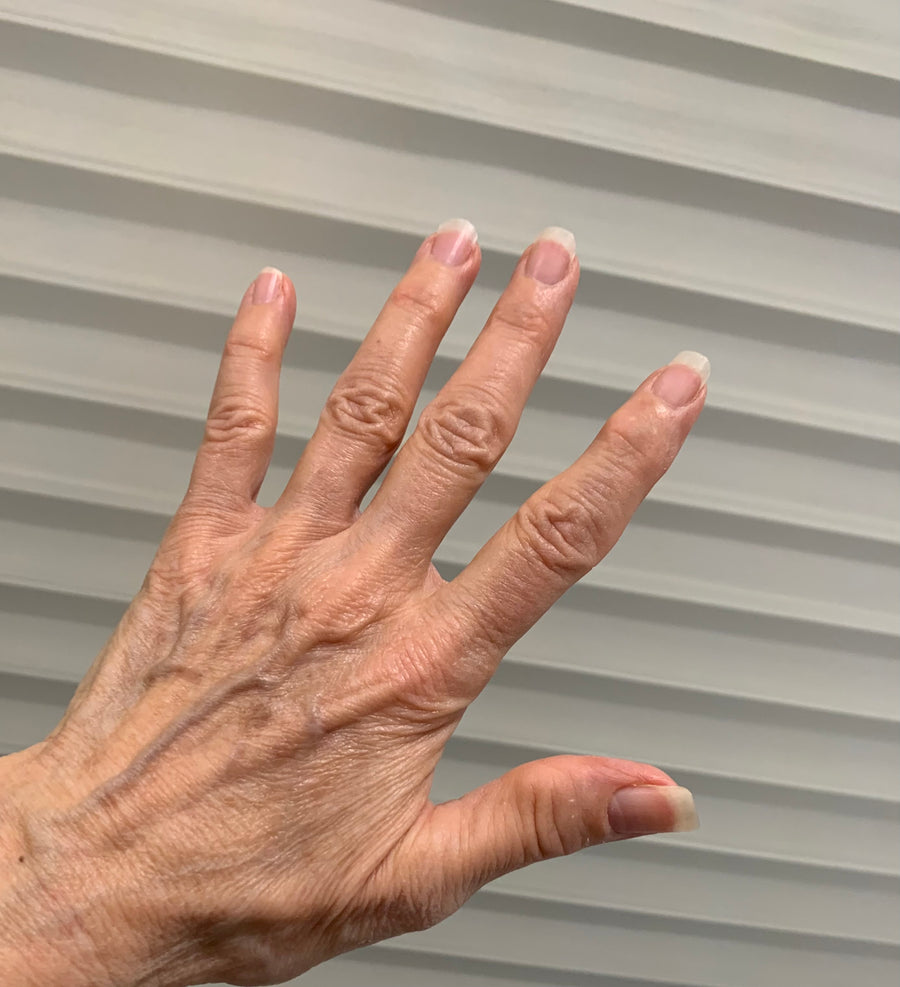
Cheryl Kantor Goldenberg

Where FlexiNail may fit

A simple 30-second daily conditioning routine

FlexiNail Fingernail Conditioner is applied directly to the natural nail plate once daily and allowed to sit briefly rather than being massaged into the nail, skin or cuticle. The routine takes about 30 seconds.

FlexiNail is intended for cosmetic natural-nail conditioning. It is not a treatment for infection, disease, or another medical nail condition.

See How FlexiNail WorksExplore FlexiNail