Nail Health Journal
Why Are My Fingernails Peeling in Layers?
Fingernails that peel in layers are often affected by dryness, repeated water exposure, manicure habits and everyday wear. Learn what may contribute and how to care for peeling natural nails as they grow.
Why do fingernails peel in layers? Learn common reasons for peeling nails, everyday habits that can contribute, and how to care for natural nails as they grow.
The visible fingernail is made of layers of keratin. When those layers lose cohesion near the free edge, the nail can begin to split or peel into thin layers. Because the damaged portion has already grown out, improvement depends largely on protecting the newer nail as it grows forward.
Frequent hand washing, repeated wetting and drying, prolonged water exposure, dry weather, acetone or nail polish remover, picking or peeling off polish, and repeated gel, acrylic or other artificial nail treatments can all place additional stress on natural nails.
Reduce repeated soaking and drying when practical, be gentle when removing polish or artificial nail products, keep nails at a manageable length while damaged areas grow out, and follow a simple, consistent conditioning routine rather than frequently changing products.
When it makes sense to get medical advice
A real customer experience related to this topic
“Flexinail has really helped my short, peeling, splitting nails to grow. They’ve never looked this good before.”
— Gail Drake
Read more customer stories →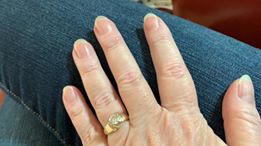
Where FlexiNail may fit
A simple 30-second daily conditioning routine
FlexiNail Fingernail Conditioner is applied directly to the natural nail plate once daily and allowed to sit briefly rather than being massaged into the nail, skin or cuticle. The routine takes about 30 seconds.
FlexiNail is intended for cosmetic natural-nail conditioning. It is not a treatment for infection, disease, or another medical nail condition.
Keep learning